

After the highlands and the wildlife of the interior, our final days brought us down to Sri Lanka’s southern coast — to Galle, where we stayed at the beautiful Jetwing Lighthouse, a Geoffrey Bawa-designed hotel perched on the rocks above the Indian Ocean. This stretch of coast is where Sri Lanka’s deep relationship with the sea comes into focus: stilt fishermen balanced over the surf, teams hauling massive nets onto the sand, mangrove rivers threading inland, and the old walled city of Galle itself, layered with five centuries of colonial history. This is Part 4 — the finale — of my Sri Lanka series. If you’re catching up, start with Part 1, Part 2, and Part 3.
Day 13: The Stilt Fishermen of Koggala
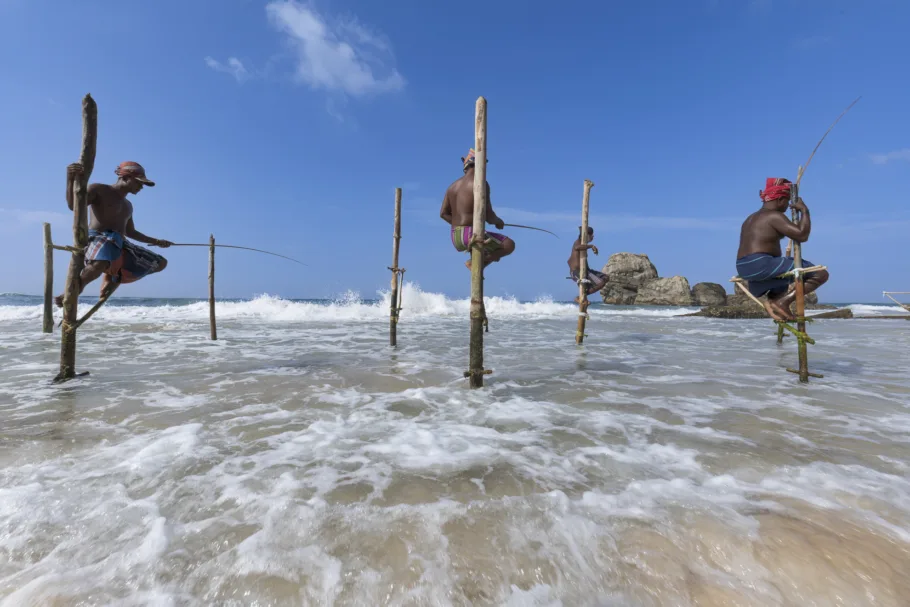
We drove about 24 km east from the Jetwing Lighthouse along the A2 coastal road to a spot near Koggala, where some of Sri Lanka’s most photographed fishermen ply their trade. Stilt fishing is one of the iconic images of the island — fishermen perched on a crossbar called a petta, fixed to a vertical wooden pole stuck into the seabed, casting for small fish like herring just beyond the breaking waves.
The practice has a surprisingly recent history. It only began during World War II, when food shortages pushed locals to fish from the remnants of shipwrecks and aircraft wreckage in the shallows. Over time, the wooden poles replaced the wreckage, and a distinctive tradition was born. The 2004 tsunami devastated the coastal communities here and largely ended stilt fishing as a primary livelihood — today it survives mostly as a paid, staged experience for visitors. Knowing that history adds a bittersweet layer to the images. These are beautiful photographs, but they document a tradition that has shifted from necessity to performance.

As a photographer, I tried to work the scene from a few angles — wide shots that show the row of poles marching out into the surf, and tighter frames that isolate a single fisherman against the blue. Getting low, almost down at the waterline, lets the foam fill the foreground and the figures read as a frieze against the sky.
Beach Seine Fishing
Further along the coast, we came across a very different kind of fishing — and got to take part in it. Maadel, or beach seine fishing, is a traditional community method where an enormous net, often over 500 meters long, is deployed in a semi-circle from a boat to encircle schools of fish near the shore. Then teams of fishermen — and anyone willing to lend a hand — haul it back in.
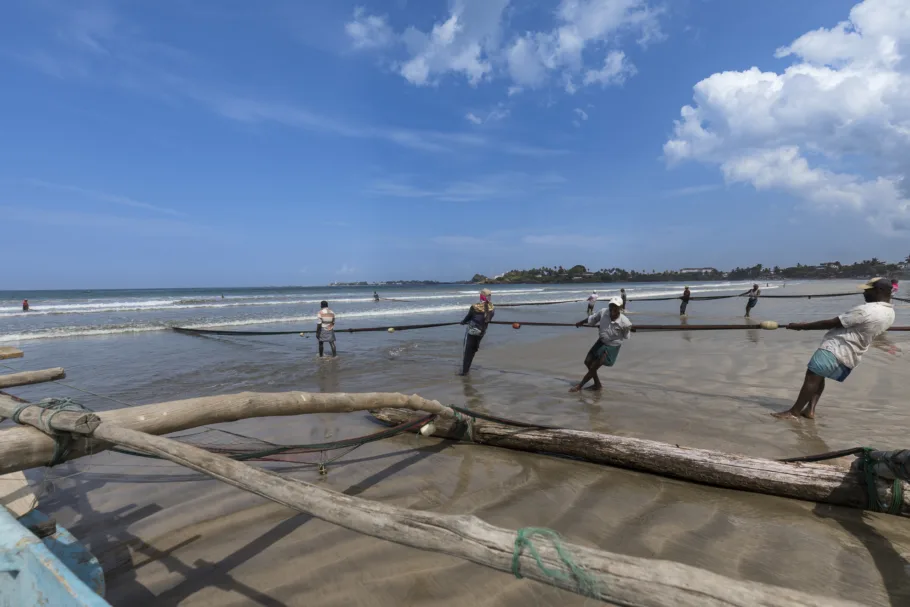
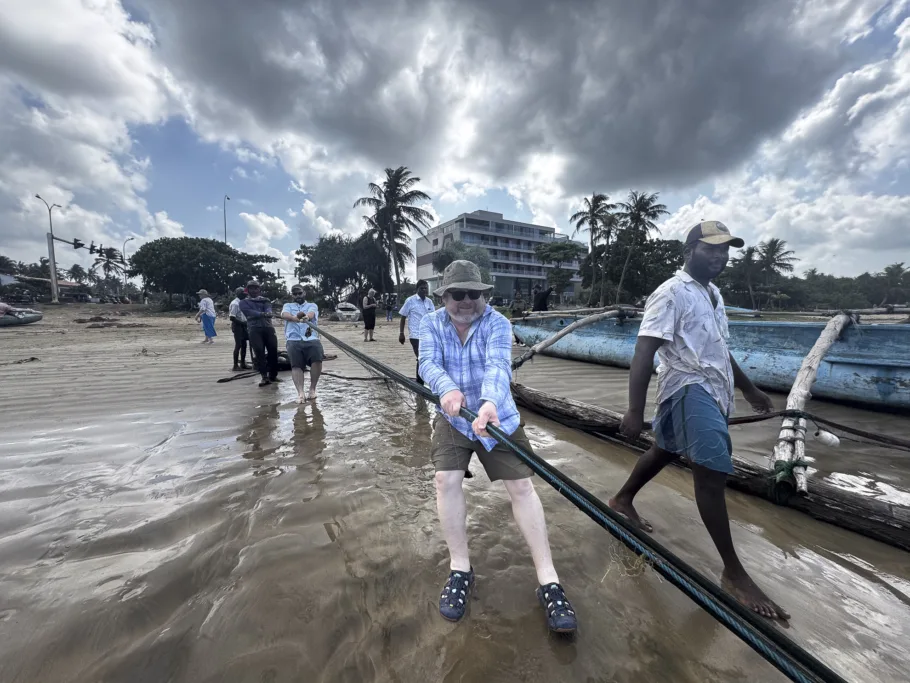
I couldn’t resist joining in. There’s something deeply satisfying about leaning into that rope alongside the local fishermen, feeling the weight of the sea on the other end. It’s hard, slow, physical work, and it brings the whole village together.
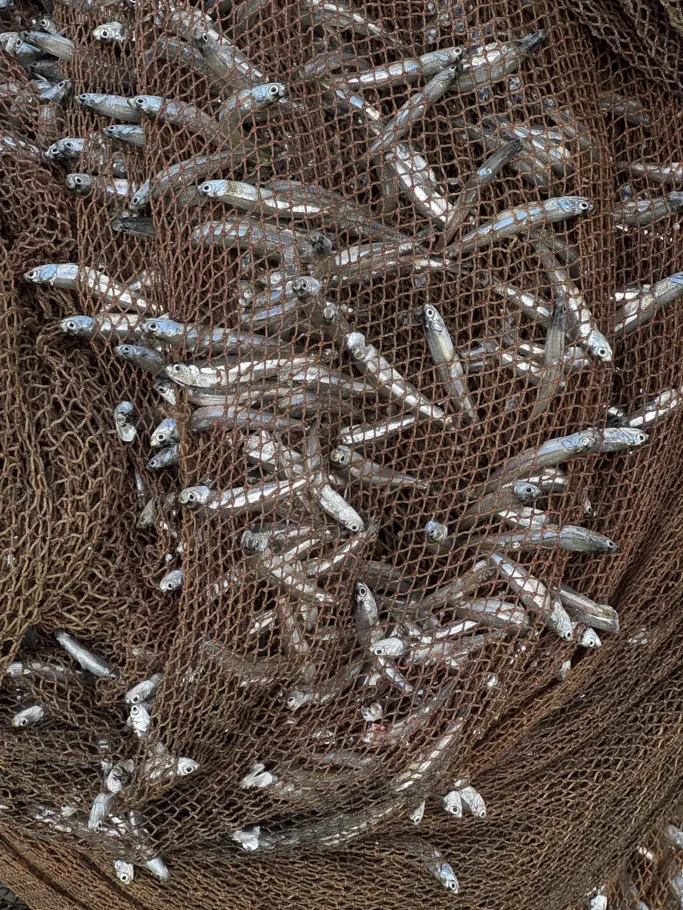
When the net finally came in, it was full of tiny silver fish — sardines and herring, glinting in the brown mesh.

The Madu River Safari
From the coast, we drove about 59 km to Balapitiya to catch a boat safari on the Madu Ganga — a 915-hectare wetland estuary that’s been designated a Ramsar site of international importance. For about 90 minutes, we wound through dense mangrove tunnels and open water, and it was one of the most peaceful, immersive experiences of the entire trip.
The Madu River is extraordinary — 64 islands, only one of them inhabited, threaded together by waterways and lined with a 60-hectare mangrove ecosystem of 14 species. The mangroves form natural tunnels you can navigate by boat, their tangled aerial roots arching overhead. These ecosystems are vital nurseries for fish, crabs, and prawns, and they shelter crocodiles, water monitors, and dozens of bird species. They also act as natural coastal defenses — the kind of buffer that matters enormously on a coast that knows what the sea can do.
Along the way, our guide pointed out the trees that shape life here: Kaduru (Cerbera odollam), the so-called “suicide tree” whose seeds are highly toxic but whose soft, lightweight wood is the traditional material for Sri Lankan masks; and balsa trees with their poisonous lime-green fruit that look, as one description put it, like Snow White apples. We passed prawn traps (kraals) set in the shallows, and — a detail that made me smile — dozens of small tour boats with Irish names. There’s no historical connection to Ireland whatsoever; it’s purely a marketing convention to charm Western tourists. It works, in a strange way.
The Cinnamon Island
One stop on the safari was a small cinnamon-producing island, where we watched the labor-intensive process that makes Sri Lanka the source of 90% of the world’s true cinnamon (Cinnamomum zeylanicum). Harvesters cut the branches, scrape off the outer bark, and carefully peel the inner bark using a copper rod, stacking the thin layers into the curled “quills” you recognize from the spice rack. The cinnamon is graded into classes — Alba being the thinnest and most expensive.
A word of honest skepticism here: true Ceylon cinnamon is thin, brittle, light brown, and rolls up like a delicate cigar with many layers, while cheaper Cassia is thick, dark, hard, and forms a single hollow roll. There’s a real risk of being sold Cassia labeled as the real thing in tourist areas. I bought some at the Cinnamon Island and, full disclosure, I haven’t unpacked it yet to inspect it — but I’m a little skeptical, both of the grading and possibly the type. Some of our group bought cinnamon sticks at a regular grocery store, and those are probably the more reliable buy.
Fish Massage, a Monastery, and a Stone Buddha
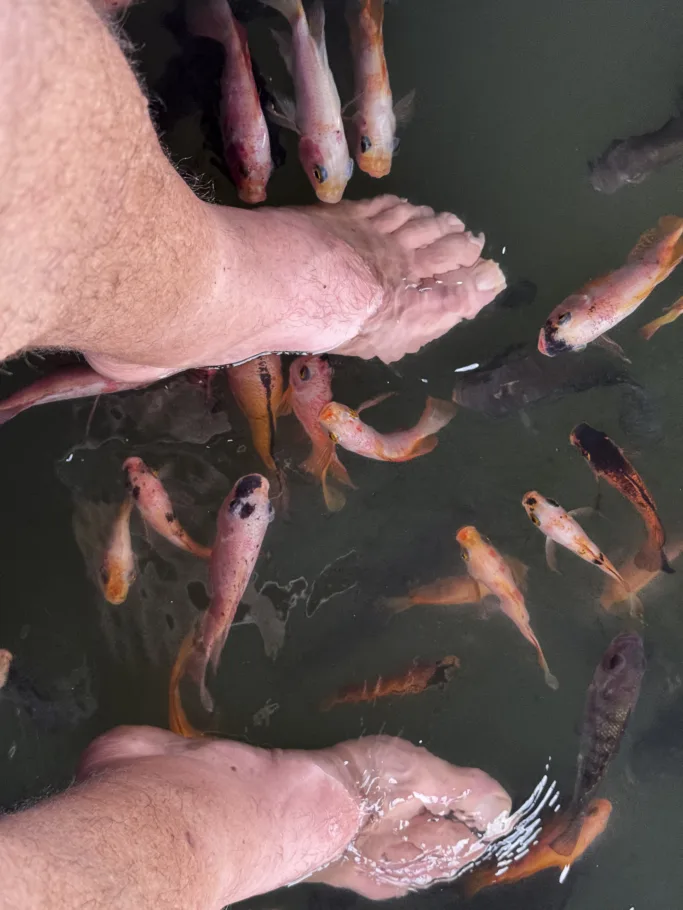
The safari also included a fish massage — you dip your feet into a netted enclosure and let hundreds of little “doctor fish” (Garra rufa) nibble away your dead skin. Ticklish, slightly absurd, oddly pleasant. We also passed the Suwasamadhi Monastery, a serene 15-acre Buddhist retreat on the riverbank with a large carved stone Buddha and a “Medicine Hill” rich in Ayurvedic herbs. It served as a safe haven during the 2004 tsunami, which gives the peaceful setting an added weight.
The Āriapāla Mask Museum
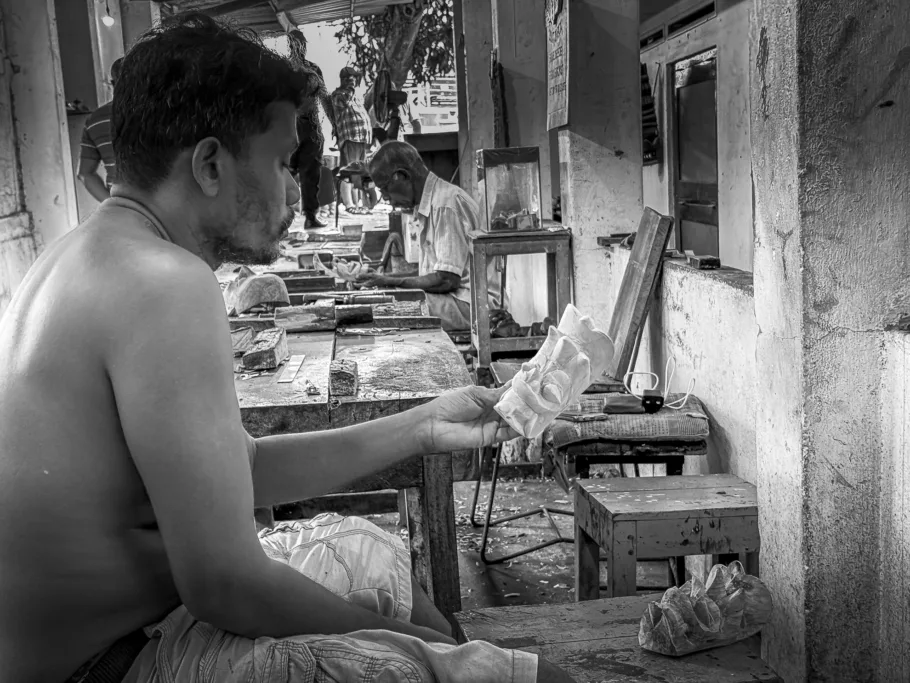
A short hop from the river brought us to the Āriapāla Mask Museum in Ambalangoda — a fifth-generation family enterprise dedicated to preserving the dying art of traditional Sri Lankan mask-making. This was a highlight for me, both culturally and photographically. Watching the craftsmen at work, carving and painting masks from that soft Kaduru wood, was mesmerizing.

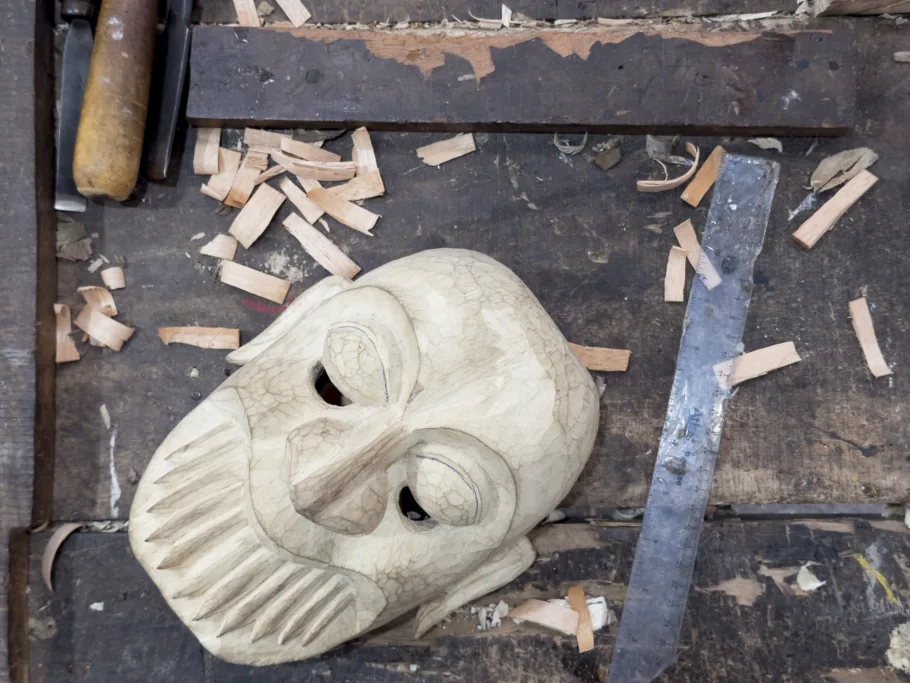
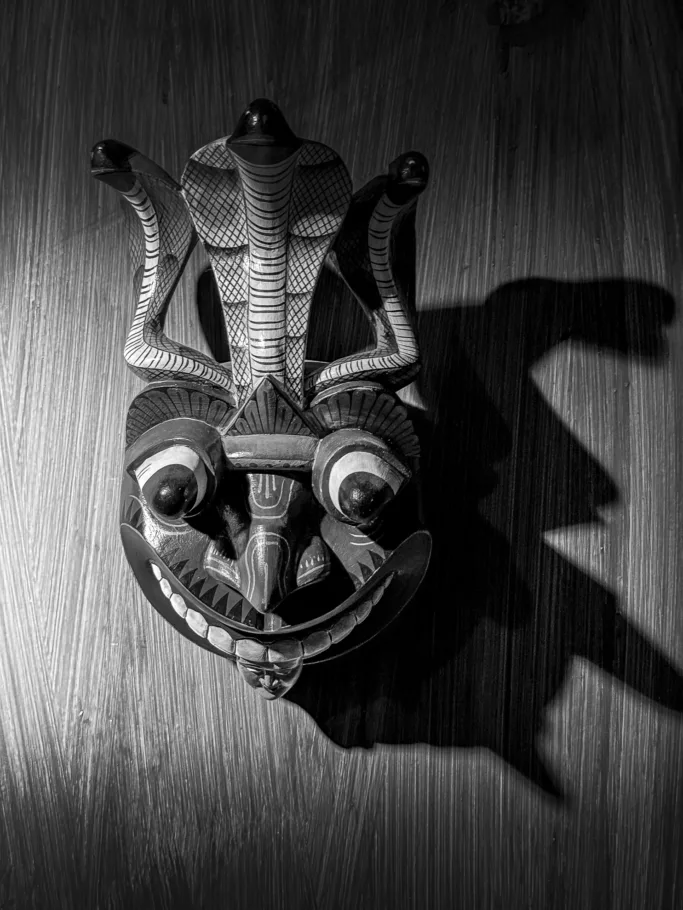
The masks fall into three traditional categories: Kolam masks for folk plays that often mock colonial life, Sanni masks used in exorcism and healing rituals to cure diseases, and Raksha masks — the vibrant, dramatic ones worn in festivals and processions. The Naga Raksha, or cobra mask, with its crown of rearing snakes, is one of the most striking.
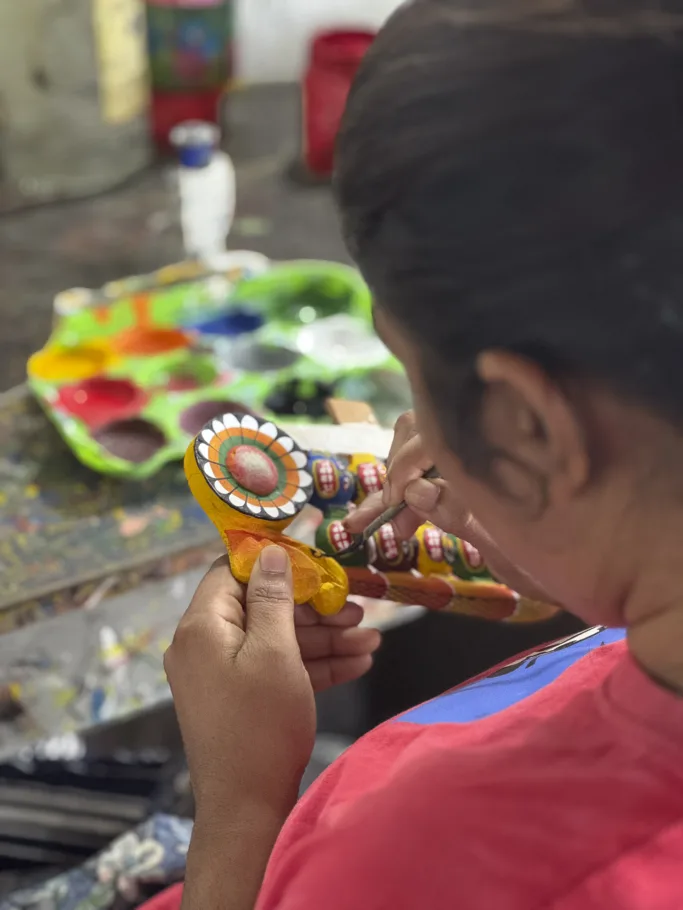
The painting is an art in its own right — bright natural pigments laid down freehand, layer by patient layer, until the carved blank comes alive with colour.
I also took a quiet black-and-white frame of the workshop itself — the carvers at their benches, tools laid out, light falling through the open front. It felt like the right way to honor a craft that has been passed down through generations.
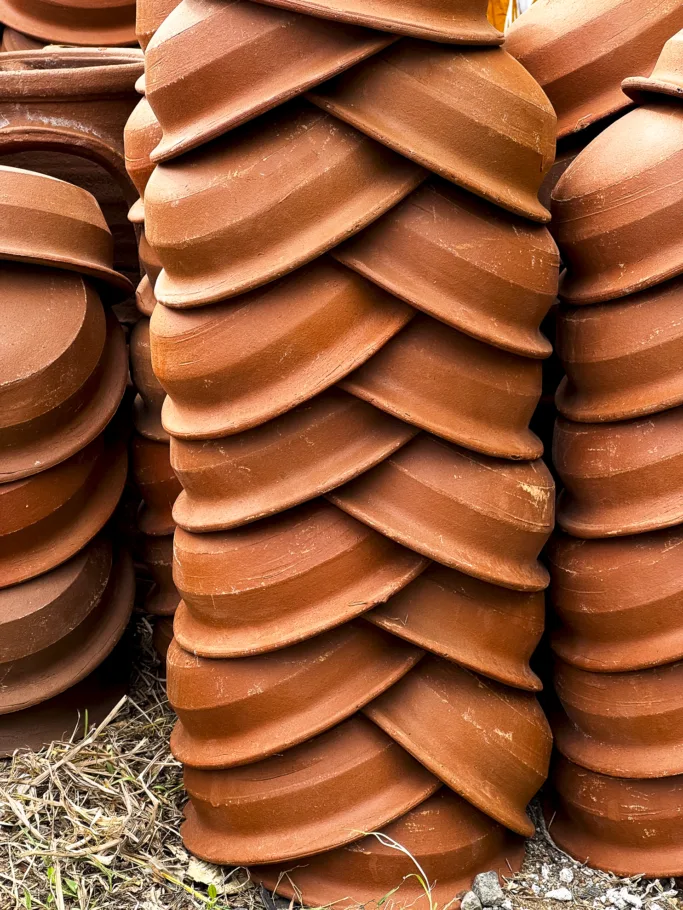
Outside, I noticed stacks of terracotta pots and chimney pieces drying in the sun — the kind of incidental, beautifully repetitive subject I can never walk past.
Galle Fort — Seen and Missed
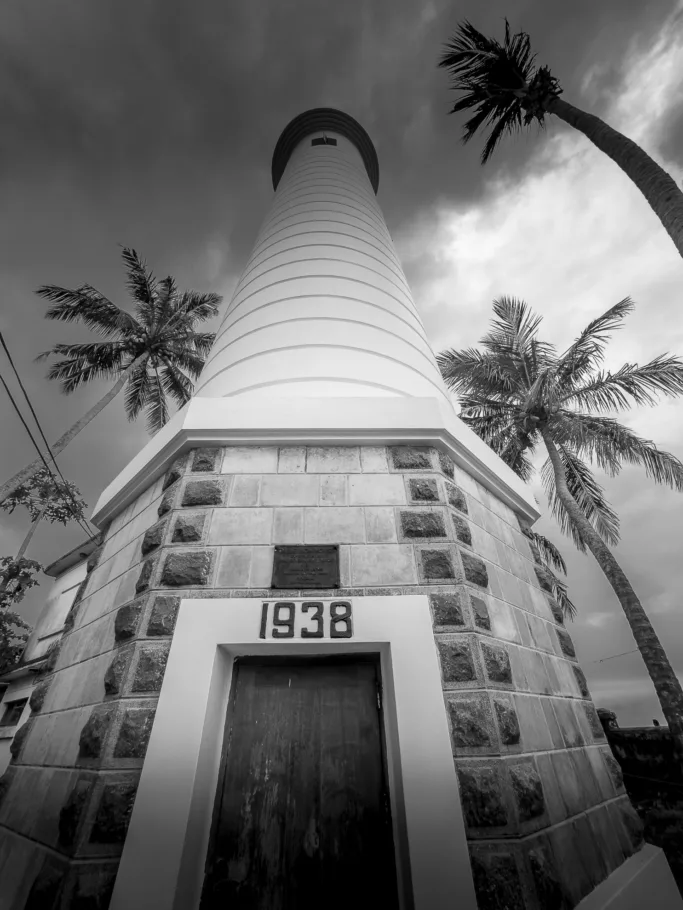
Galle Fort is a UNESCO World Heritage Site, originally built by the Portuguese in 1588 and extensively fortified by the Dutch in the 17th century. It’s the largest remaining European-built fortress in Asia, with 14 bastions, a 3 km rampart walkway, an iconic British-built lighthouse (the date 1938 is cast above its door), and a Dutch Reformed Church from 1755. But what makes it special isn’t just the engineering — it’s that the fort is a living, breathing community, with colonial-era villas, mosques, temples, narrow streets, galleries, and cafes all woven together.
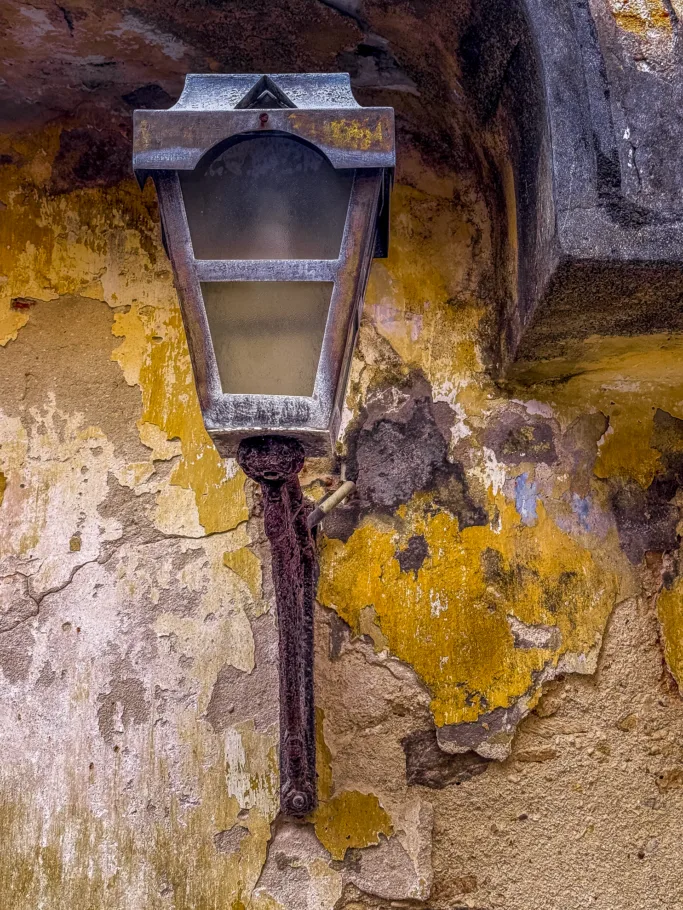
Part of the pleasure of the fort is in the small, weathered details — the way decades of salt air and monsoon have worked on every surface.
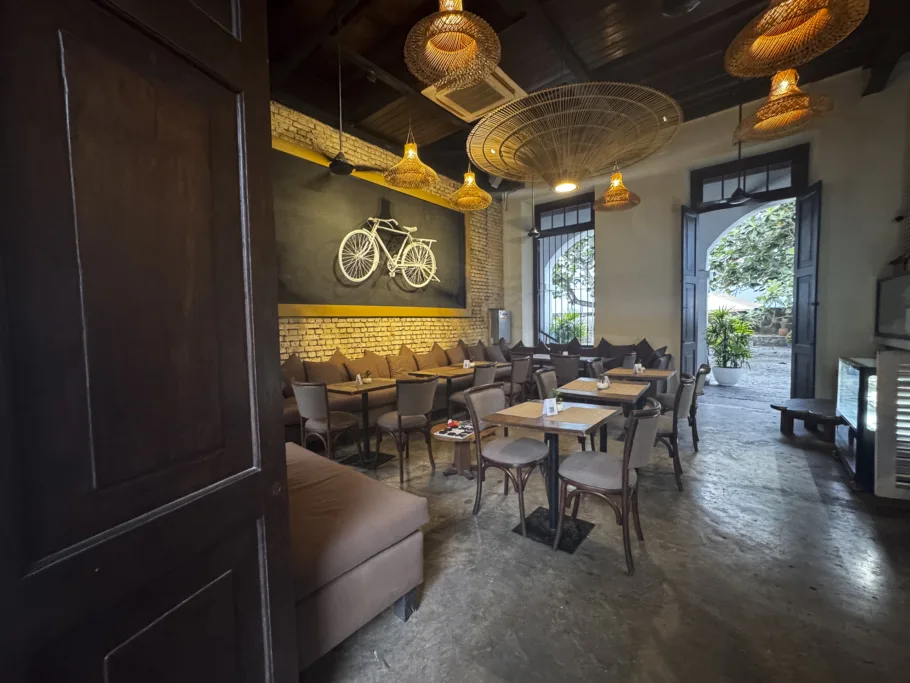
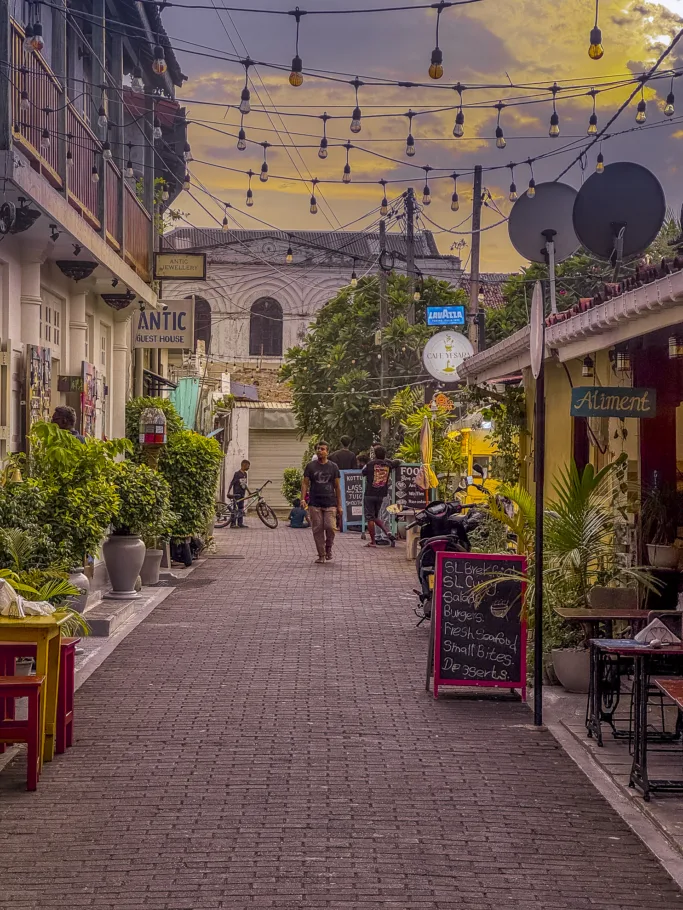
Wander the side streets and you find the fort’s present-day life — galleries, guesthouses, and cafes that have settled comfortably into the old colonial buildings.
Jetwing Lighthouse — Our Galle Home
Our base for these final days, the Jetwing Lighthouse, deserves its own mention. Designed by the legendary Sri Lankan architect Geoffrey Bawa, it’s a masterclass in tropical modernism — and its most famous feature is the spectacular spiral staircase wrapped in a sculpture of life-sized bronze warriors, depicting a historic battle between the Sinhalese and Portuguese.
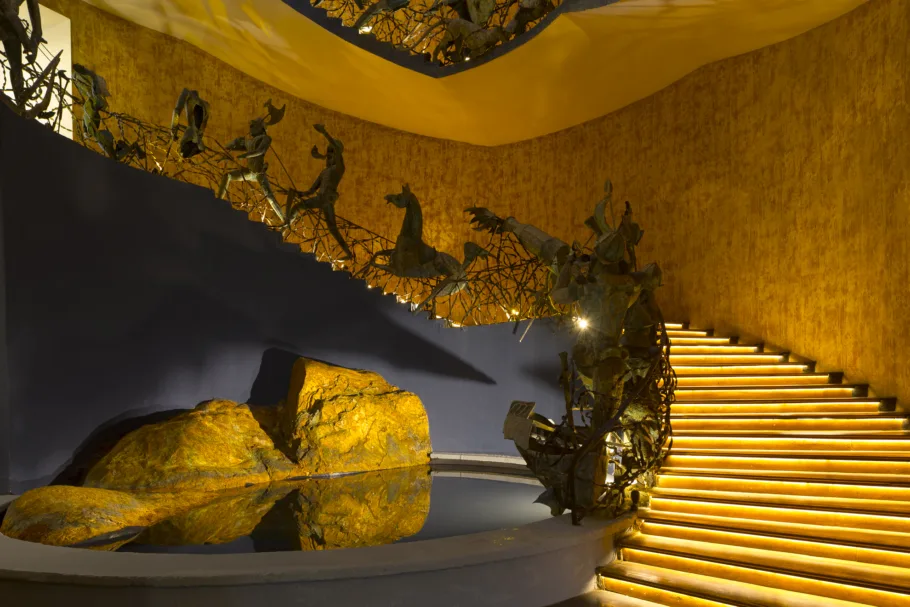
From the foot of the stairs, the whole sculpture rings the stairwell opening overhead like a frozen cavalry charge.
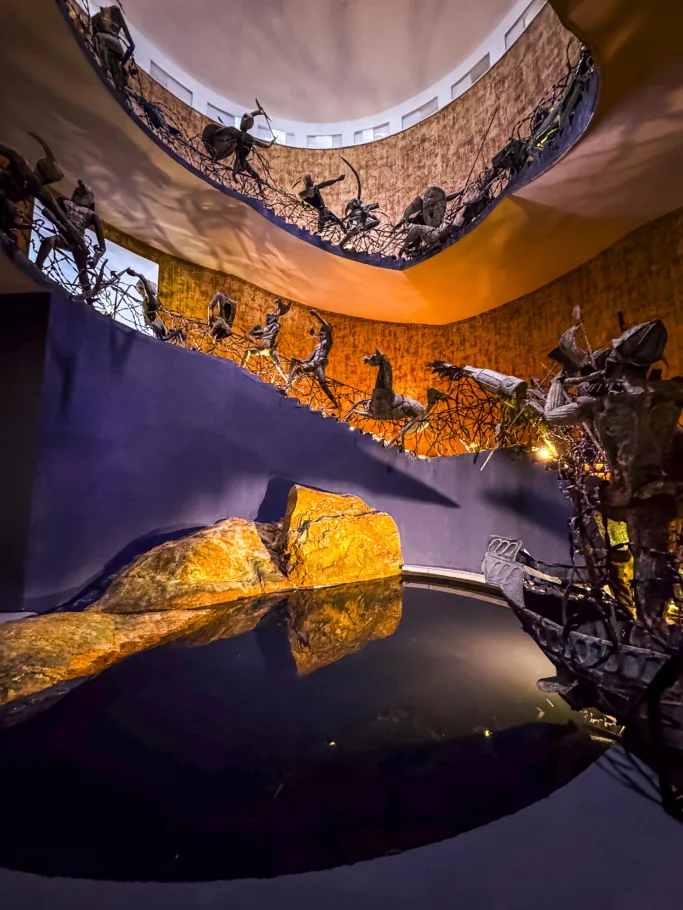
The rest of the hotel is just as considered — Bawa’s instinct for drama and restraint is everywhere. Granite boulders are left exposed and brought right into the building, blurring the line between architecture and the rocky headland it sits on.
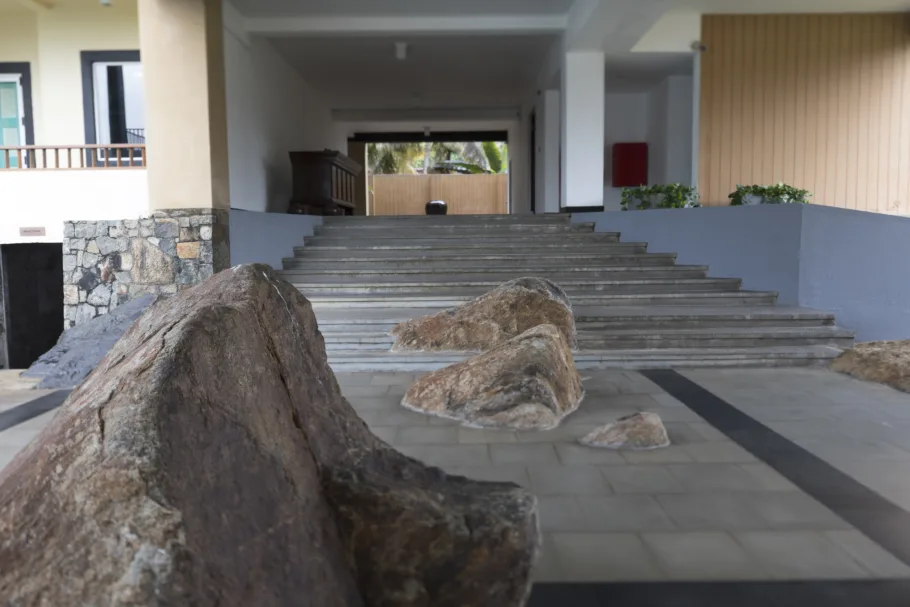
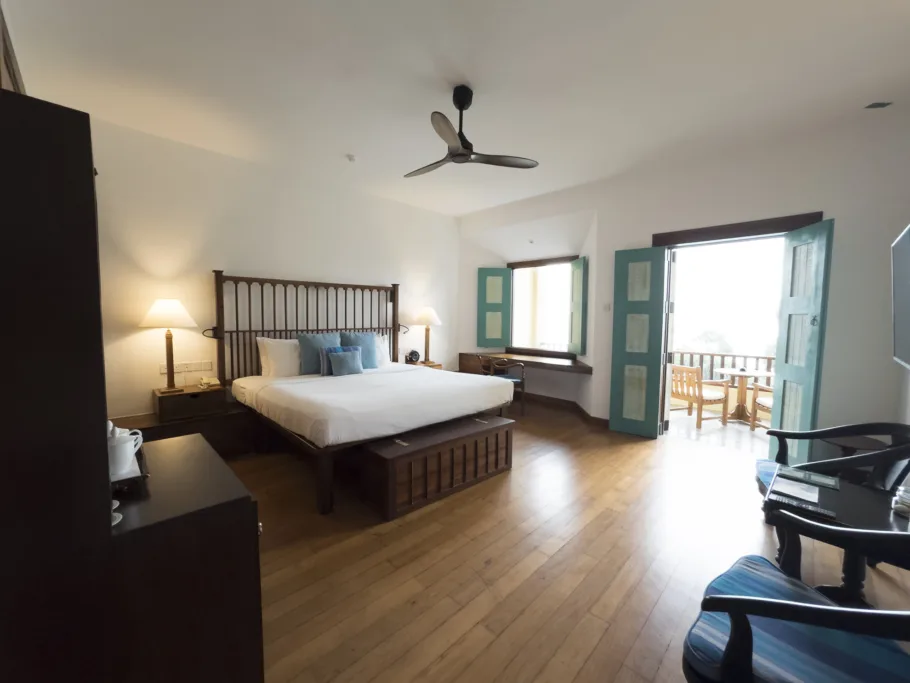
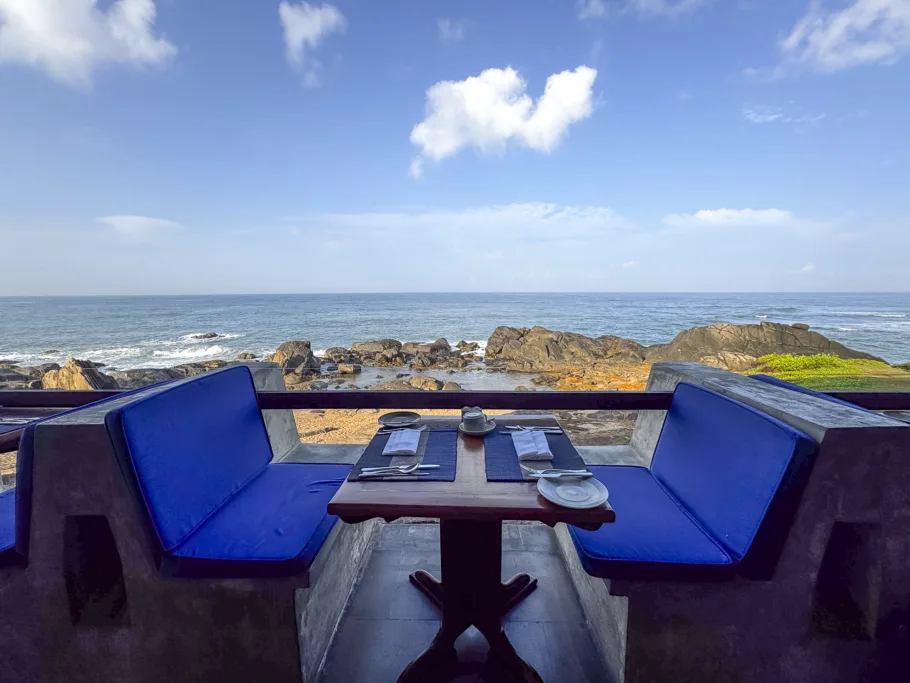
The hotel is full of these quiet, considered moments — from the framing of a doorway to a breakfast table set out on the rocks above the surf.
Coffee, Streets & a Last Look
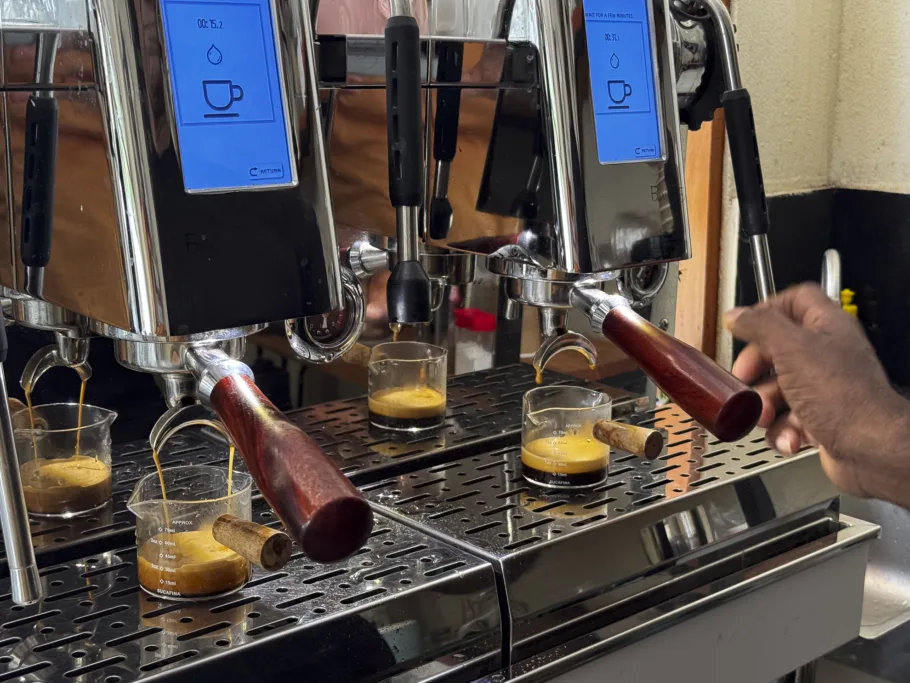
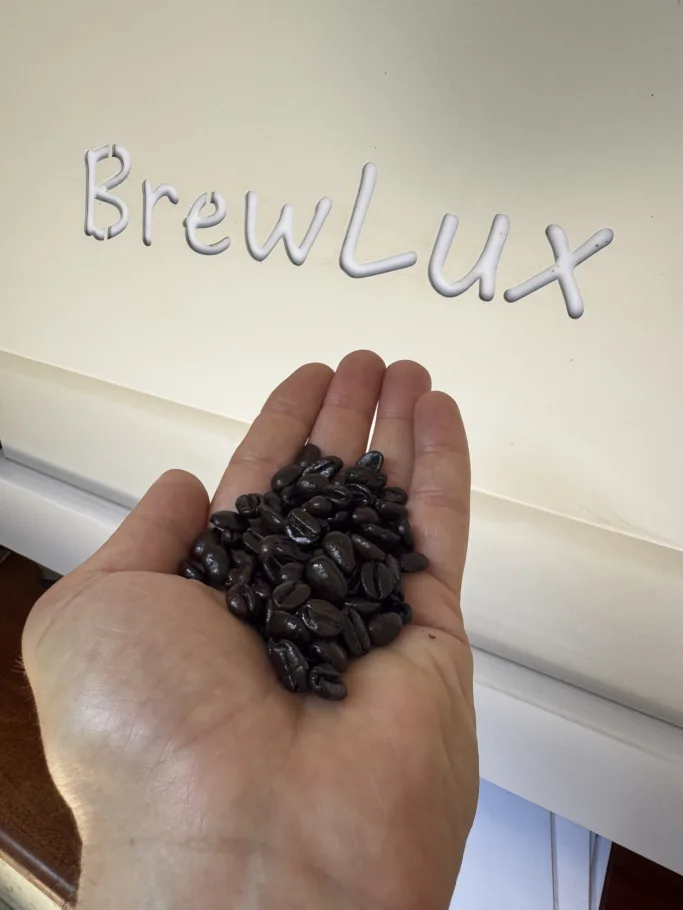
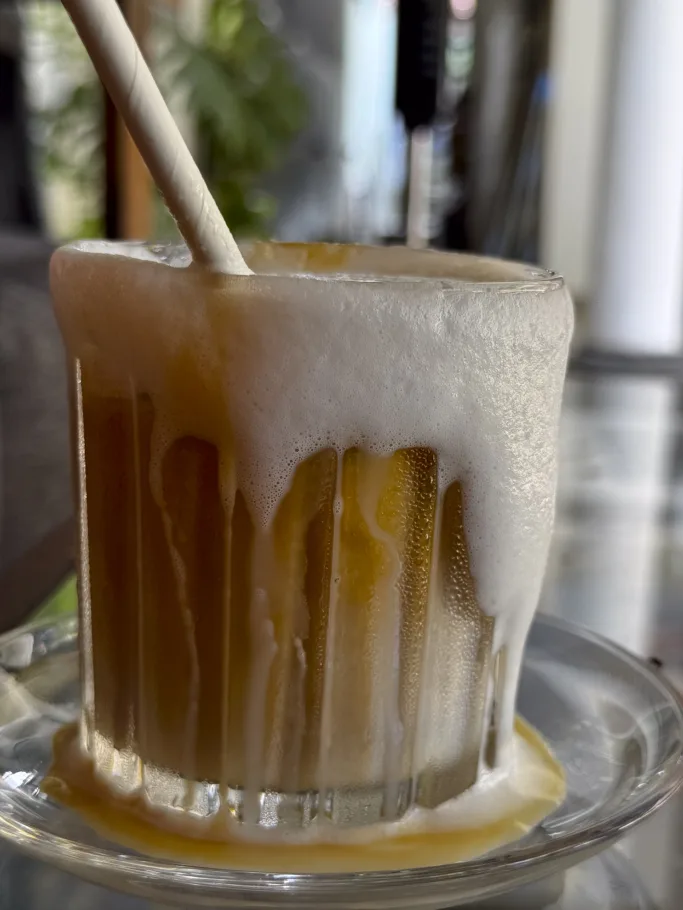
In between, there was time for the small pleasures — good coffee, the iced coffees that became a running theme of this trip, and quiet wanders through the old streets. Sri Lanka’s specialty coffee scene has come a long way, and watching a careful barista pull shots into glass measures was its own small pleasure.
Reflections: Farewell to Sri Lanka
Standing on the ramparts above the Indian Ocean on our last evening, watching the light go soft over the water, I kept thinking about how much ground we’d covered — not just in kilometers, but in worlds. In just under two weeks, Sri Lanka had taken us from 2,000-year-old cave temples to a leopard in a tree, from bullock carts in a farming village to a century-old bridge in the sky, from misty tea estates to this warm southern coast where fishermen still balance on poles over the surf and haul nets by hand the way their grandparents did.
What stays with me most is the way everything here is layered — Portuguese, Dutch, and British history stacked under Sinhalese and Tamil culture; Buddhist, Hindu, Muslim, and Christian worship side by side; ancient traditions quietly turning into tourist performances even as they’re kept alive. As a photographer, that density is a gift. There’s always another frame, another story beneath the surface.
I came home with thousands of images and the certainty that I’d only scratched the surface. Sri Lanka rewards curiosity, patience, and a willingness to be surprised — which is everything I look for in a place.
Thank you for following along on this four-part journey. I’ll be back.
The Long Way Home
We flew out of Sri Lanka on a red-eye, and the journey back ran through Hong Kong. Bleary and a little jet-lagged on the layover, I stumbled onto a % Arabica counter in the airport — and that single clean cup, leaf poured perfectly into the foam, was one of the better coffees of the whole trip. A small, unreasonably good find at exactly the right moment.

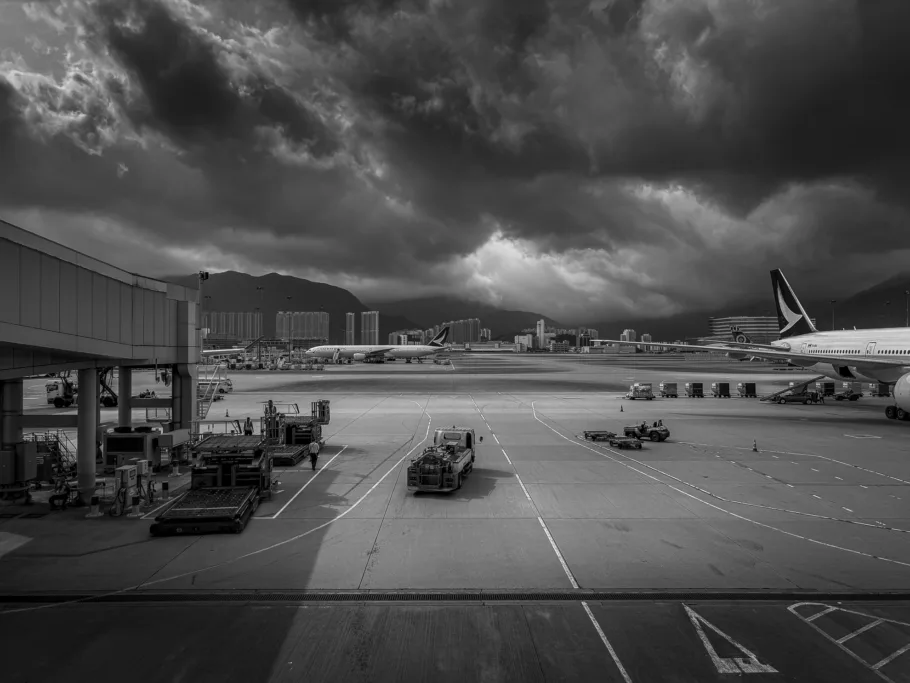
Then, while waiting for the onward flight, the sky over the tarmac did something dramatic — a storm breaking open over the mountains behind the city. A fitting last frame: the long way home.
Practical Notes for Part 4
- Stilt Fishermen (Koggala / Ahangama / Weligama): Best at sunrise or sunset. It’s now a paid, staged experience — expect to tip the fishermen for photographs (negotiate beforehand). Approach respectfully; these are real people, not props.
- Madu River Safari (Balapitiya): Boats depart throughout the day; the 90-minute to 2-hour tours cover the mangrove tunnels, cinnamon island, fish massage, and monastery. About 80 km south of Colombo, 35 km north of Galle. Quieter early in the morning.
- Buying Cinnamon: Look for thin, brittle, light-brown quills with many delicate layers (true Ceylon). Avoid thick, dark, single-roll bark (that’s Cassia). When in doubt, a reputable grocery store is a safer bet than a tourist stall.
- Āriapāla Mask Museum (Ambalangoda): Free or low-cost entry, with a working workshop and mask library. A genuine cultural stop, not a tourist trap. Great for photography.
- Galle Fort: Allow at least half a day. Walk the ramparts at sunset, visit the Dutch Reformed Church and lighthouse, and wander the side streets. Living community, not a museum.
- Jetwing Lighthouse: A Geoffrey Bawa-designed icon. Worth visiting (or at least having a drink) even if you’re not staying, for the bronze staircase alone.
The Complete Sri Lanka Series
- Part 1: Ancient Temples, Lion Rock & Elephants
- Part 2: Village Life, Kandy & Tea Country
- Part 3: Scenic Railways, Ella & Yala Safari
- Part 4: Stilt Fishermen, the Madu River & Galle (you are here)
Follow me on Instagram at @rvincent for more from Sri Lanka and wherever I head next.