

URL slug: sri-lanka-cultural-triangle-dambulla-sigiriya-elephants Meta Description: From Dambulla’s 2,000-year-old cave temples to Sigiriya’s Lion Rock and wild elephant safaris — Part 1 of my Sri Lanka photography adventure. Category: Long Trip Target keyword: Sri Lanka Cultural Triangle photography
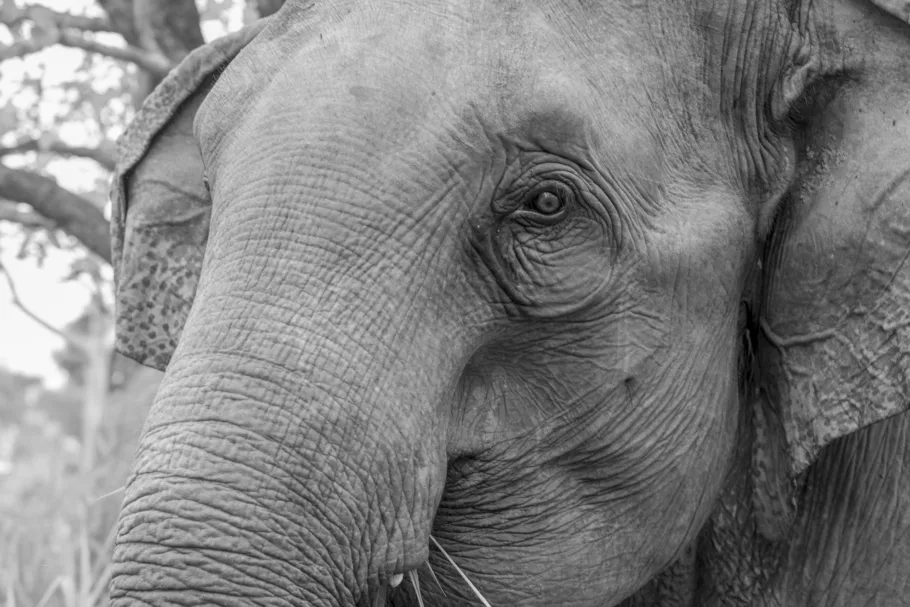
A couple of weeks ago, I traveled to Sri Lanka for what turned out to be one of the most visually rich and culturally immersive trips I’ve taken in recent years. I’ve been to Southeast Asia before — my trip to Myanmar a few years back left a deep impression on me — but Sri Lanka felt like an entirely different chapter. It’s a small island with an almost absurd density of UNESCO World Heritage Sites, ancient temples, wildlife, and landscapes that shift from tropical coast to misty highlands in a matter of hours. This is Part 1 of a 3-part series covering the trip, starting with the Cultural Triangle — Dambulla, Sigiriya, and our first wild elephant encounter.
Day 1: Colombo to Dambulla Cave Temple
We started our journey at the Cinnamon Red in Colombo and headed northeast toward Dambulla. Google Maps says the drive is about 154 km and just over 3 hours, but in Sri Lanka, distances on paper don’t always translate to time on the road. The drive itself is part of the experience — the scenery shifts gradually from the congestion of Colombo to lush countryside, and there’s always something worth looking at along the way.
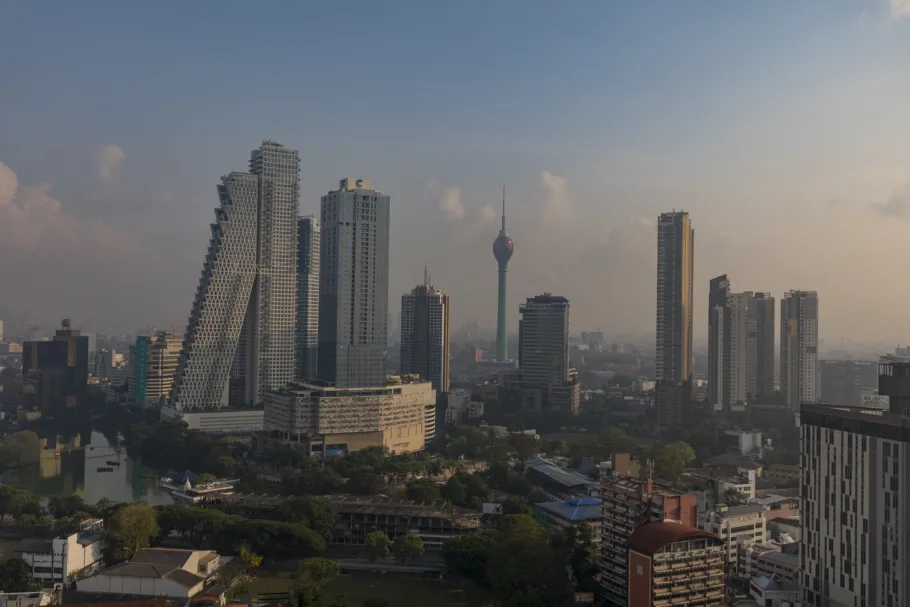
One of the first things I noticed were the pineapples. Not the golden yellow ones you’d expect, but red pineapples — vibrant, pinkish-red fruits used mostly as ornamental plants and for cooking and creating essences. A bit further along, we passed stands selling the more familiar yellow Mauritius variety, which Sri Lanka is known for — intensely sweet and incredibly juicy. We also drove through areas of cashew cultivation, which is concentrated in Sri Lanka’s dry zone. About 75% of the country’s cashews are grown in home gardens, and we happened to be there during peak season in late March and early April.
We stopped for lunch and I had my first encounter with string hoppers — or indi-appa as they’re known locally. These steamed rice noodle nests are a staple here, pressed through a mold and steamed for just a few minutes. Simple, delicious, and completely different from anything I’d had before. I learned later that day-old string hoppers are often shredded and stir-fried with vegetables, eggs, and spices into something called String Hopper Kottu — a dish I ended up craving for the rest of the trip.
The Dambulla Cave Temple
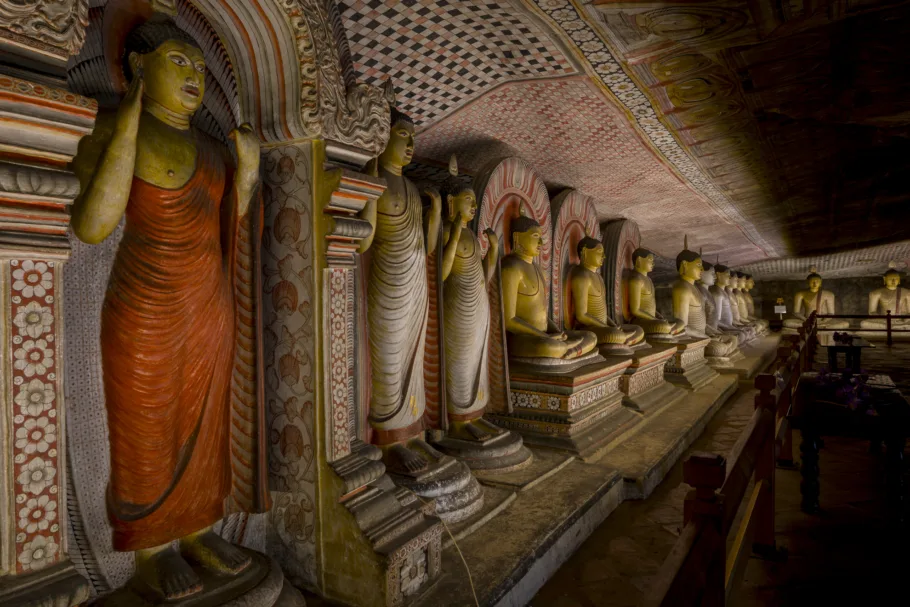
The main event of Day 1 was the Dambulla Cave Temple, the largest and best-preserved cave temple complex in Sri Lanka. The site dates back to the first century BCE, and the rock formation towers about 160 meters (520 feet) over the surrounding plains. Walking up the approach, you can already feel the scale and the age of this place — it’s one of those sites where the history is almost tangible.
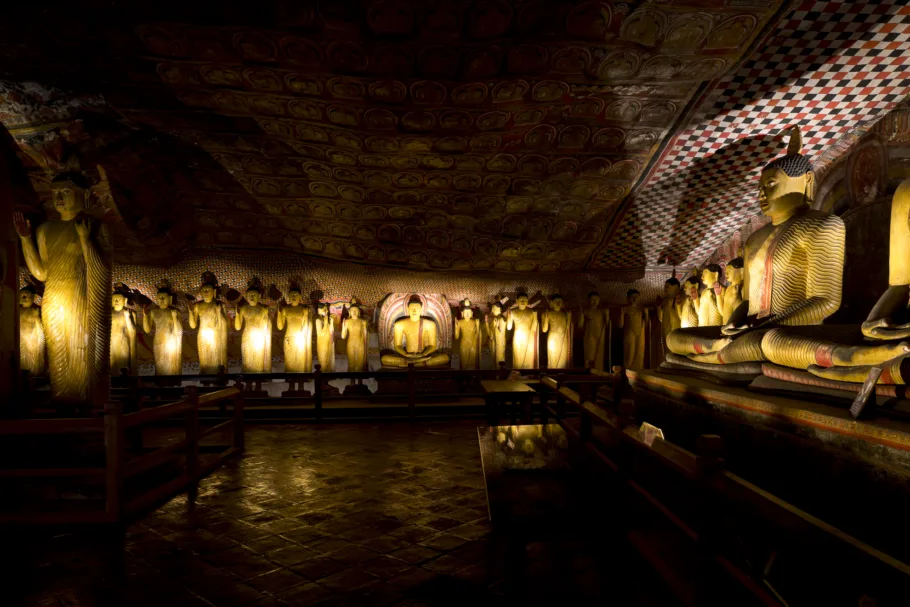
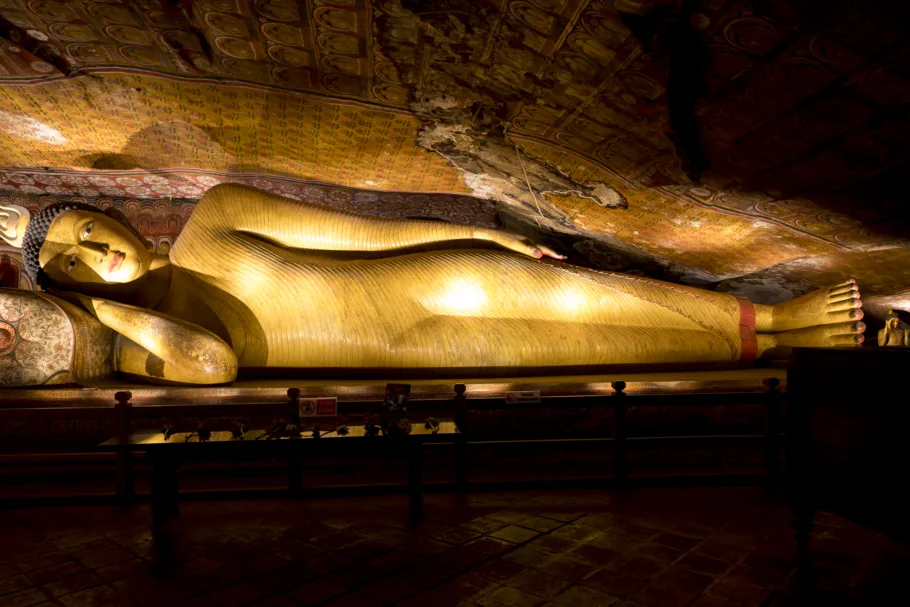
Inside, the temple spreads across five caves containing a total of 153 Buddha statues, three statues of Sri Lankan kings, and four statues of gods and goddesses, including Vishnu and Ganesha. The murals alone cover an area of 2,100 square meters and depict scenes from Buddha’s life, including the temptation by the demon Mara and his first sermon. What I found particularly fascinating is that many of the statues — especially the large reclining figures — were carved directly from the living granite rock by local artisans under royal patronage, beginning with King Walagamba in the first century BCE as a gesture of gratitude for the refuge the caves provided him. Other statues were sculpted from brick and plaster, with additions spanning all the way to the 18th-century Kandyan period.
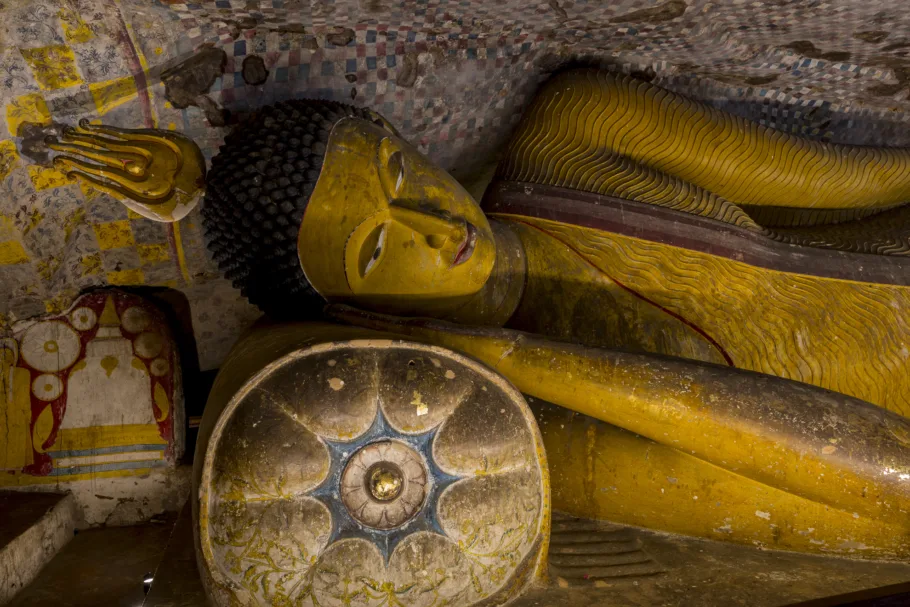
As a photographer, the cave temples are both a gift and a challenge. The light is low and uneven, the spaces are intimate, and the gold and color of the murals and statues create incredible compositions — but you have to work for them. I found myself slowing down, studying the light, and letting my eyes adjust before raising the camera.
Sunset at Habarana
After Dambulla, it was a short 24 km drive to our hotel, the Cinnamon Lodge Habarana. Along the way, we paused at the edge of a lake to watch the sunset, and that’s when we spotted our first elephant of the trip — a wild one, just grazing calmly near the water. After the ancient calm of the cave temples, it was a perfect transition into the wildness that defines Sri Lanka’s interior.
That evening at dinner, the restaurant staff informed us that no alcohol could be purchased or publicly consumed the following day. It was a Poya day — the full moon. In Sri Lanka, every full moon is a Buddhist holiday, observed with spiritual reflection, meditation, and visits to temples. The sale of alcohol is legally prohibited across the country on these days. Bars and liquor stores close, and it’s considered both polite and legally required to refrain from public consumption. It’s a reminder — one of many on this trip — that Sri Lanka’s spiritual traditions aren’t just historical. They’re very much alive.
Day 3: Sigiriya — The Lion Rock
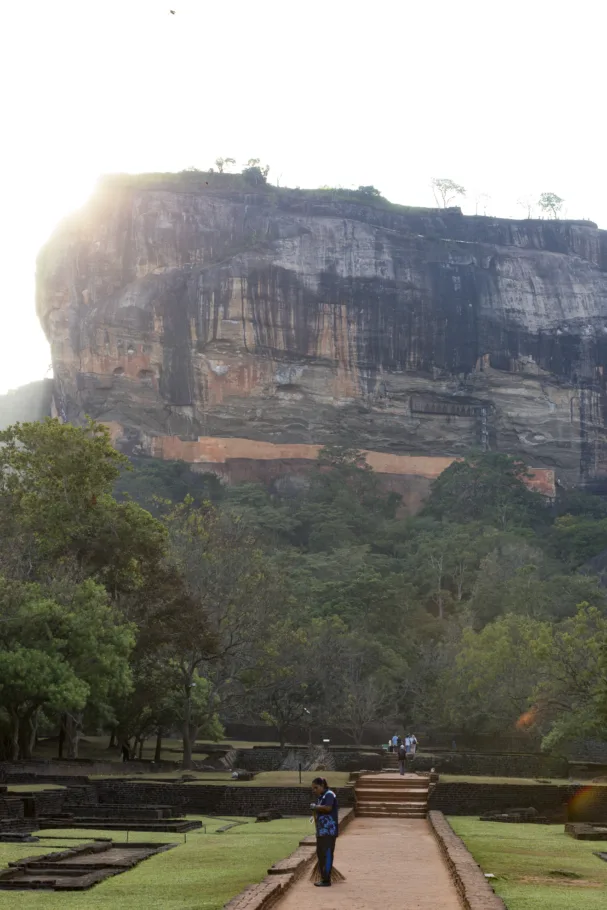
Sigiriya is an ancient rock fortress dominated by a massive granite column rising approximately 180 meters (590 feet) above the surrounding plains. According to the Cūḷavaṃsa, the ancient Sri Lankan chronicle, this dramatic formation was selected by King Kashyapa (477–495 CE) as his new capital. He built a palace on top, decorated it with frescoes, and constructed a gateway in the shape of an enormous lion — hence the name. After Kashyapa’s reign, the site became a Buddhist monastery that was active until the 14th century. Today, Sigiriya is a UNESCO World Heritage Site and one of the most visited places in Sri Lanka for good reason.
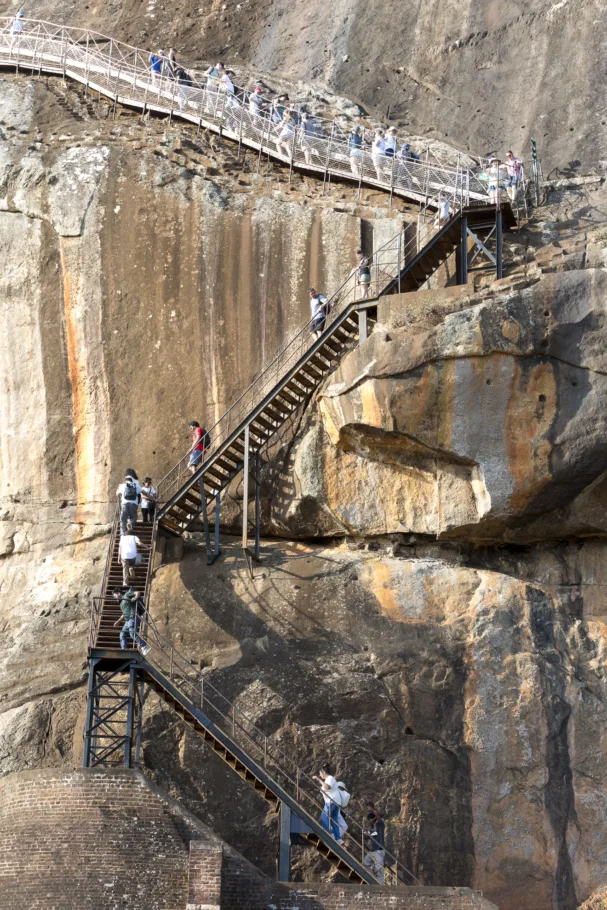
The climb is not for the faint of heart — the stairs are steep and exposed — but every level reveals something new. The famous frescoes, the mirror wall, and then the Lion’s Gate itself, where massive carved lion paws flank the final staircase. From the top, the views over the surrounding jungle and reservoirs are absolutely spectacular. As a photographer, I could have stayed up there for hours. The flat summit, where the ruins of the palace still trace the outlines of gardens, pools, and living quarters, gives you an incredible sense of what this place must have looked like 1,500 years ago.
Wild Elephants at Hurulu Eco Park
That afternoon, we headed to Hurulu Eco Park, a protected wildlife reserve near Habarana that is part of a UNESCO Biosphere Reserve. The park sits within an elephant corridor that links several national parks, allowing herds to migrate in search of water and food. The landscape is a mix of dry forest, scrub, grasslands, and reservoirs — and it’s significantly less crowded than the better-known national parks, which made the experience feel more intimate and authentic.
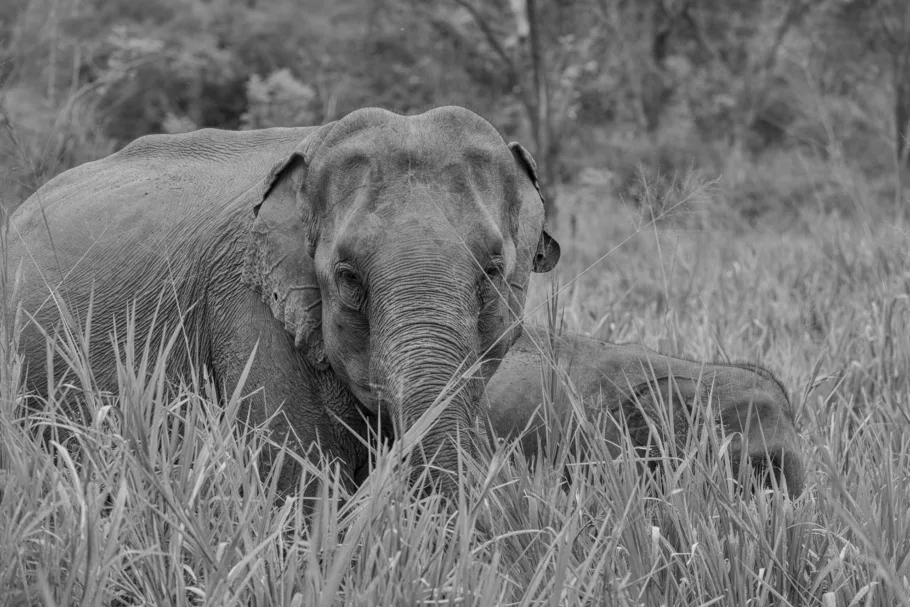
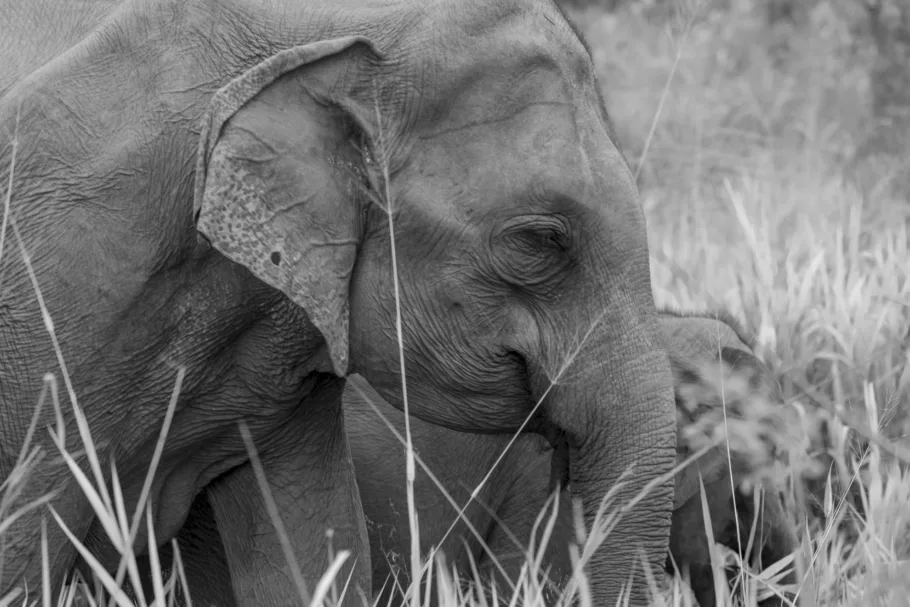
And the elephants — we saw many, many elephants. The Sri Lankan elephant is the largest of the three recognized subspecies of the Asian elephant, reaching a shoulder height of up to 11 feet 6 inches and weighing as much as 5,500 kg (12,100 lb). Their skin is darker than their Indian and Sumatran cousins, with larger, more distinct patches of depigmentation on the ears, face, trunk, and belly. Sri Lanka has the highest density of elephants in Asia, which is incredible for an island this size, but also means that human-elephant conflict is an ongoing and serious concern as habitat gives way to settlements and cultivation.
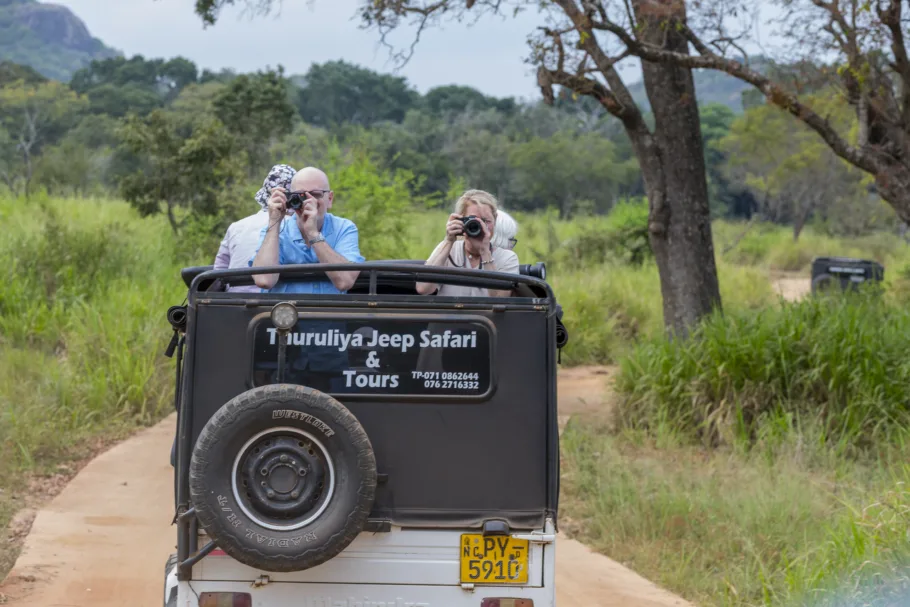
Watching them from the jeep — mothers with calves, solitary bulls, groups moving through the scrub toward water — was mesmerizing. There’s something about being in the presence of these animals in the wild, on their terms, that no zoo or documentary can replicate. I kept shooting, trying to capture the scale and the calm of these encounters, the way the late afternoon light caught the dust they kicked up as they moved.
What’s Coming in Part 2
This is the first post from my Sri Lanka trip — more to come. In Part 2, I’ll cover the next leg of our journey as we move deeper into the island. Stay tuned.
In the meantime, you can follow along on my Instagram @rvincent where I’ve been sharing some of my favorite shots from this trip.
Special thanks to Nancy, for being the official scribe of this trip, her daily notes were amazing and so useful for creating this serie.
Practical Notes for Part 1
- Dambulla Cave Temple: Allow at least 1.5–2 hours for the visit. Dress modestly (shoulders and knees covered) and be prepared to remove your shoes. The rock surface can be hot in the afternoon sun, so morning visits are more comfortable.
- Sigiriya: Start early to beat both the heat and the crowds. The climb takes about 1.5 hours at a comfortable pace. Bring plenty of water. Entry fees for foreign visitors are significantly higher than for locals — budget accordingly.
- Hurulu Eco Park: Late afternoon safaris (3:30–6:00 PM) are best for elephant sightings as animals gather near water. The park is less busy than Minneriya or Kaudulla, making it a great alternative during peak season.
- Poya Days: These happen every full moon and are national holidays. No alcohol is sold anywhere on the island. Plan accordingly if that matters to you, and embrace the cultural experience — it’s actually a beautiful tradition to witness.
- Driving distances: Don’t trust Google Maps travel times for Sri Lanka. Roads are slower than they appear on paper. Factor in extra time and enjoy the drive.
Pingback: Sri Lanka: Kandy, Sacred Relics & Tea Country (Part 2)
Pingback: Sri Lanka: Scenic Railways, Ella & Yala Safari (Part 3)